The Separation Anxiety Crate Protocol: Safe Indoor Boundaries for Puppies
Welcoming a new puppy into your home brings immense joy, but it also brings the critical responsibility of building early behavioral boundaries. Left unmanaged, a young puppy’s natural attachment to you can quickly spiral into distress when you leave the room. Destructive whining, heavy digging at door frames, and frantic pacing are classic signs of distress.
To help families establish a calm home environment, we engineered the separation anxiety crate protocol. This step-by-step behavioral template utilizes advanced dark den canine psychology to teach your puppy that their enclosure is a secure sanctuary, not a lonely isolation cell.
Understanding the Roots of Puppy Crate Anxiety
Before starting the training protocol, it is vital to understand why standard wire cages often worsen puppy crate anxiety.
Dogs are instinctively den animals. In the wild, canines seek out tight, covered, dark spaces to hide from predators and lower their sensory input. When a sensitive puppy is placed inside an open wire mesh cage in the middle of a busy room, they are exposed to 360 degrees of visual and audio stimuli:
- Visual Shadows and Triggers: Pacing family members, moving ceiling fans, and shifting outside shadows keep the puppy’s nervous system on high alert.
- The Barrier Frustration Loop: Seeing you walk past without opening the door triggers extreme frustration, causing the pup to bite at the wires or frantically scratch the tray.
- The Den Banishment Panic: Because the open wire cage doesn’t feel like a protective cave, the puppy views being placed inside as a scary punishment, which can lead to severe long-term separation panic.
Understanding the Roots of Puppy Crate Anxiety
Before starting the training protocol, it is vital to understand why standard wire cages often worsen puppy crate anxiety.
Dogs are instinctively den animals. In the wild, canines seek out tight, covered, dark spaces to hide from predators and lower their sensory input. When a sensitive puppy is placed inside an open wire mesh cage in the middle of a busy room, they are exposed to 360 degrees of visual and audio stimuli:
- Visual Shadows and Triggers: Pacing family members, moving ceiling fans, and shifting outside shadows keep the puppy’s nervous system on high alert.
- The Barrier Frustration Loop: Seeing you walk past without opening the door triggers extreme frustration, causing the pup to bite at the wires or frantically scratch the tray.
- The Den Banishment Panic: Because the open wire cage doesn’t feel like a protective cave, the puppy views being placed inside as a scary punishment, which can lead to severe long-term separation panic.
Why Dark Den Rotomolded Configurations Win the Battle
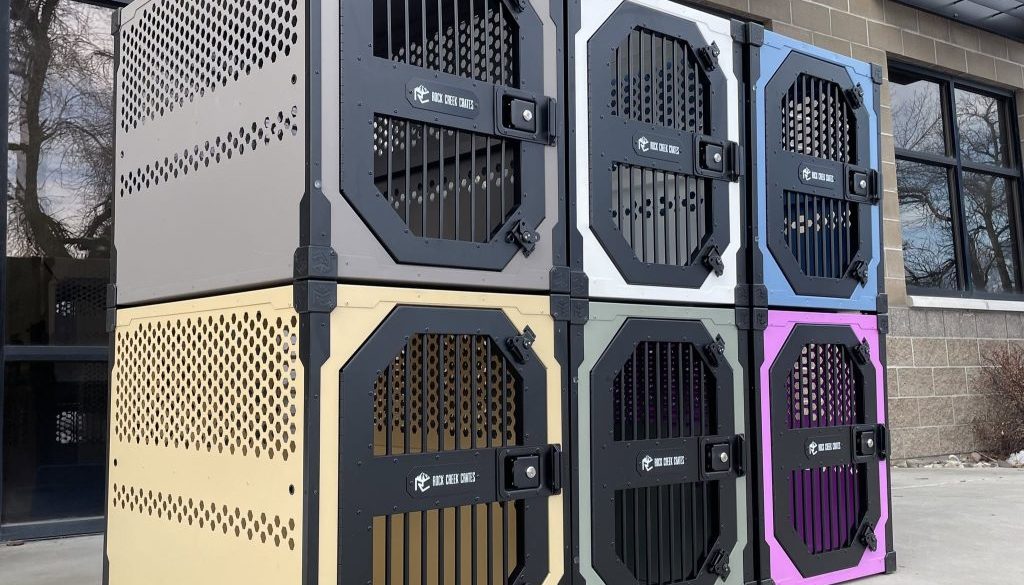
To break the panic loop, professional behaviorists recommend shifting your home setup toward an indestructible dog kennel for severe anxiety. Double-walled rotomolded plastic crates (like Gunner or Dakota 283) completely revolutionize boundary training through specific design elements:
1. Natural Sight Reductions
Thick, solid walls block the puppy’s line of sight. By cutting off peripheral movement, the puppy stops scanning the room for your presence, which helps lower their heart rate and promotes deep sleep loops.
2. Acoustic Sound Dampening
Rotomolded architecture dampens sudden indoor sounds like dropping keys, televisions, or closing doors, keeping the interior space peaceful.
3. Absolute Chew-Proof Safety
Panicked dogs can easily injure their teeth or trap their jaws attempting to bend open traditional thin wire bars. A flush, single-piece molded plastic interior has zero catch points, ensuring your pup stays 100% physically safe while learning calm coping skills.
Step-by-Step Execution of the Protocol
Follow this structured behavioral checklist during your puppy’s first two weeks at home to build an unbreakable foundation of confidence.
Step 1: The Positive Association Introduction
Never force a conscious puppy into a crate and lock the door immediately. Leave the door pinned wide open. Toss high-value treats (like freeze-dried beef liver or a stuffed peanut butter toy) inside the back corner. Allow your puppy to wander in, eat, and walk back out freely without any barrier pressure. Feed all daily meals directly inside the back of the enclosure.
Step 2: Closing the Barrier Natively
Once your puppy steps inside happily to eat their meals, close the door gently while they chew. Keep the door closed for exactly 30 seconds while sitting directly next to the mesh entry face. Open the door before they finish eating or show any signs of whining. Slowly scale this down-stay metric over three days from 30 seconds to 5 minutes, remaining completely visible.
3. The Controlled Departure Distance
Give your puppy a long-lasting chew item and close the door loop safely. Step quietly out of the room for exactly 60 seconds, then return.
The Golden Rule: Never open the door if your puppy is actively whining or barking, as this rewards the panic behavior. Wait for at least 5 seconds of absolute silence before opening the door, teaching them that calm silence is what brings you back.
Step 4: Systematic Time Scaling
Slowly increase your departure times in structured increments: 15 minutes, 30 minutes, 1 hour, and eventually up to 3 to 4 hours. Because the dark den environment feels naturally soothing, your puppy will quickly learn to use this time for restorative sleeping cycles rather than anxious pacing.
Seamlessly Integrating the Protocol into Your Home
Building reliable indoor boundaries is a long-term investment in your dog’s mental health. By combining patient behavioral training with a secure, low-stimulus environment, you help your puppy grow into a confident, self-soothing adult dog that welcomes quiet down-time.
If you are currently setting up your home infrastructure for a new arrival, explore our Master Heavy-Duty Travel Dog Crate Directory to select a factory-authorized, rotomolded den configuration specifically sized to support this step-by-step separation protocol.